
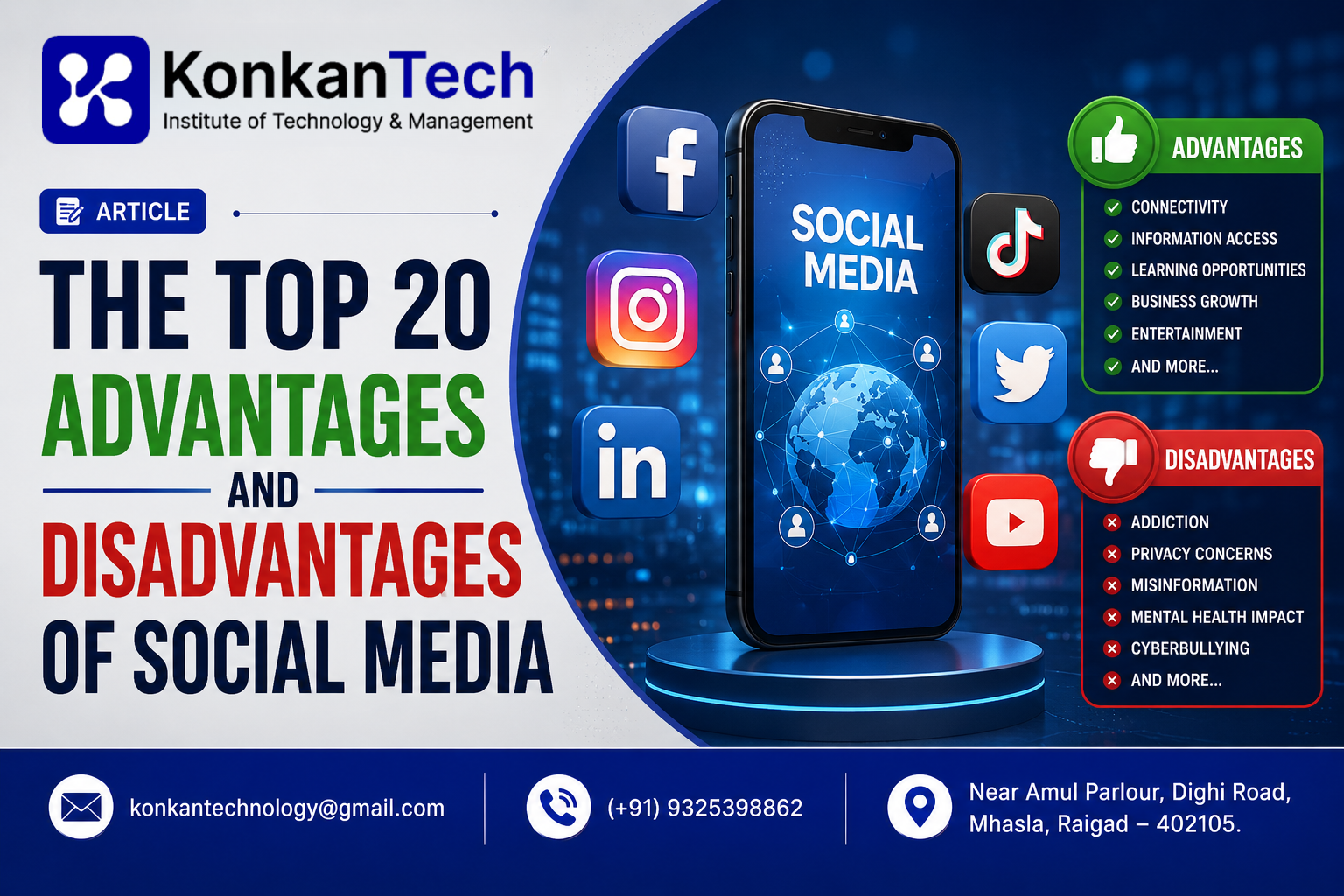
Social media has become an important part of modern life. It helps people communicate, share information, promote businesses, learn new things, and stay connected with the world. However, excessive or careless use of social media can also create several personal, social, and professional challenges.
Understanding both the advantages and disadvantages of social media can help users make better and more responsible use of these platforms.
Social media makes it easy to communicate with friends, family, colleagues, and people around the world through messages, voice calls, video calls, and online communities.
Social media allows people to connect with others from different countries and cultures without being limited by geographical distance. It makes it easier to exchange ideas, experiences, and perspectives.
Social media provides quick access to news, updates, educational content, industry trends, and other information. Users can follow reliable sources, organizations, experts, and professional communities to stay informed.
Students and professionals can use social media to access tutorials, educational videos, study groups, expert advice, and useful learning resources. It can also help people discover new subjects and develop additional skills.
Businesses can use social media to promote their products and services, reach potential customers, increase brand awareness, and build an online presence. Social media marketing can be particularly useful for businesses looking to communicate with their target audience.
Professional networking through social media can help individuals discover job opportunities, connect with industry professionals, showcase their skills, and learn about developments in their chosen fields.
Social media allows businesses to communicate directly with their customers. Companies can answer questions, respond to feedback, address concerns, and build stronger relationships with their audience.
Social media provides access to a wide range of entertainment, including videos, music, photographs, live streams, games, and other digital content.
Users can share their ideas, photography, artwork, writing, videos, designs, and other creative work with a wider audience. Social media provides a platform for individuals to express themselves and showcase their talents.
Social media helps people find communities based on shared interests, hobbies, professions, experiences, and goals. These communities can encourage discussion, collaboration, learning, and networking.
Sharing personal information online can create privacy risks, especially when users do not carefully manage their account and privacy settings. Users should avoid sharing sensitive information unnecessarily.
Social media can sometimes be used for harassment, bullying, threatening messages, and harmful communication. Such behavior can negatively affect a person's online experience and emotional well-being.
Spending too much time on social media can become a habit. Excessive scrolling and frequent checking of social platforms may reduce the time available for studies, work, family, exercise, and other important activities.
Incorrect or misleading information can spread quickly on social media. It can sometimes be difficult to distinguish reliable information from false or inaccurate claims. Users should verify important information before sharing it.
Frequent notifications, updates, and endless scrolling can distract users from important responsibilities. Excessive social media use may affect productivity at work, school, or home.
Constant exposure to other people's online lives can sometimes contribute to stress, insecurity, or dissatisfaction. Users should remember that social media often presents selected moments rather than a complete picture of someone's life.
Users may encounter fake accounts, phishing attempts, fraudulent offers, misleading advertisements, and other scams on social platforms. People should be cautious when clicking unfamiliar links or responding to unexpected messages.
Using social media late at night can interfere with healthy sleep routines. Spending long periods online before bedtime may reduce the amount of time available for proper rest.
People often share selected highlights of their lives online. Comparing one's everyday life with carefully presented social media content can create unrealistic expectations and dissatisfaction.
Although social media makes online communication convenient, excessive reliance on digital communication may reduce opportunities for direct, face-to-face conversations and personal interaction.
Social media offers many benefits, from global communication and educational opportunities to business promotion, professional networking, entertainment, and community building. At the same time, issues such as privacy concerns, misinformation, cyberbullying, excessive use, online scams, and social comparison should not be ignored.
The key is to use social media responsibly, safely, and purposefully. By protecting personal information, verifying information before sharing it, managing screen time, and maintaining a balance between online and offline activities, users can make better use of the opportunities social media provides.
For more information about digital marketing, IT & networking courses, and other technology services, you can contact KonkanTech.
Phone: +91 9325398862 Email: konkantechnology@gmail.com Address: Near Amul Parlour, Dighi Road, Mhasla, Raigad – 402105 Working Hours: Monday–Saturday, 9:00 AM–8:00 PM